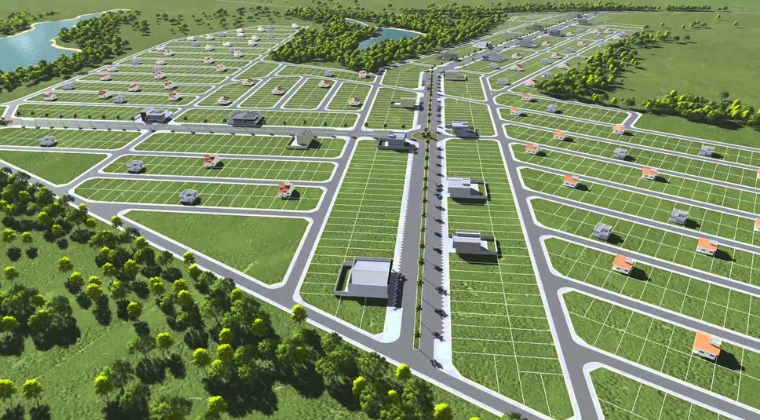
When we talk about land investment in the U.S., one truth stands out: development changes everything. Roads, transit lines, zoning updates, even parks don’t just improve neighborhoods, they increase land value and create new opportunities for investors and communities alike. Across the U.S., the impact of development on land value is impossible to ignore.
In San Diego, properties located near light rail stations consistently sell at higher prices, while in Phoenix, new businesses increase by an impressive 88% in areas connected to transit lines. In New York, the famous High Line park transformed its neighborhood, driving property values up by nearly 35%. Even in rural areas, renewable energy projects are reshaping land appreciation, and farmlands located near solar installations have seen values rise by about 4% on average. Closer to home, Gainesville, Texas, is following the same upward trend. With infrastructure improvements, highway access, and growing investor attention, Gainesville is proving that when smart development meets opportunity, land values don’t just grow, they soar. The trend is consistent and undeniable: where development goes, value follows.
When it comes to land investment, one principle that holds true is that development creates value. Gainesville, Texas, is a perfect example of this trend playing out in real time .The city is undergoing rapid housing and infrastructure growth, with nearly 1,000 new housing units approved and phase one already under construction. This signals not only population expansion but also a rising demand for residential land. At the same time, Gainesville’s industrial capacity is booming. With more than 300 acres of rail-served land at the Gateway Industrial Park, strategically located on I-35 and certified by BNSF, the city is becoming a magnet for logistics and manufacturing investment.
Proximity is another advantage. Gainesville sits just an hour north of Dallas–Fort Worth, tapping into a labor pool of nearly 4 million people within a 60-mile radius. That makes it both a small city with local charm and a strategic hub with big-city accessibility. The real estate appreciation data tells the story even more clearly: Gainesville homes have appreciated by 126.7% over the past decade, averaging an 8.53% annual growth rate, placing it in the top 20% of U.S. markets. Add to this the city’s $200 million in active development projects supported by incentives, and it’s clear Gainesville is cultivating long-term, sustainable growth.
For investors and developers, the message is simple: Gainesville is creating wealth. The city’s combination of housing development, industrial readiness, strategic location, and proven appreciation makes it one of Texas’s most promising land investment opportunities. Gainesville is positioning itself exactly where investors want to be: at the intersection of development, demand, and future value.
Here is the bigger picture; the US real estate market shows us again and again that development is the heartbeat of appreciation. But Gainesville’s story reminds us that if we combine smart infrastructure, sustainability, and equity, we don’t just build cities; we build futures. If you’re thinking about where the next wave of land value is rising, Gainesville deserves a closer look.